
Written by Beck Phillips
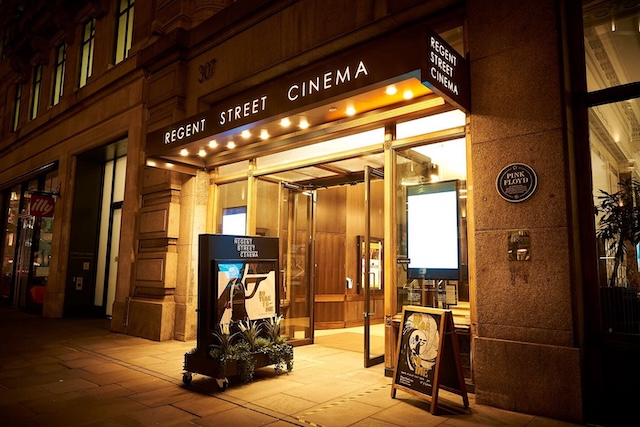
Tucked neatly behind the grand façades of Regent Street lies a small venue that changed British cultural history forever.
Granted, while London is home to countless landmarks, there are very few that can claim to have given birth to an entire industry.
And yet, Regent Street Cinema – part of the University of Westminster’s historic Regent Street campus, is widely recognised as the birthplace of British cinema.
Long before the days of streaming services and red-carpet premieres, audiences gathered inside the cosy theatre of the Royal Polytechnic Institution to witness some of the most remarkable technological innovations of the Victorian age.
It was here, on 21 February 1896, that British audiences experienced moving pictures for the very first time.
The screening – presented by the Lumière brothers and using their revolutionary Cinématographe, marked the first public exhibition of motion pictures to a paying audience in the United Kingdom.
An industry was born that evening, and British cinema has never looked back.
The story of Regent Street Cinema begins even earlier. The theatre opened in 1848 as part of the Royal Polytechnic Institution, a pioneering centre for science, engineering and public education.
Designed to showcase optical demonstrations, magic lantern projections and technological experiments, the venue became synonymous with innovation and public engagement.
Generations of Londoners flocked to Regent Street desperately attempting to witness inventions and spectacles that presented themselves as pure magic. Think – the modern day equivalent of Harry Potter’s The Cursed Child theatre production.
This spirit of experimentation made the theatre the perfect setting for the arrival of cinema.
When the Lumière brothers brought their moving images from Paris to London, audiences were astonished by scenes of everyday life projected onto a screen. What may seem ordinary today represented a revolutionary new form of storytelling in 1896.
Throughout the twentieth century, the cinema remained at the forefront of cinematic innovation. It hosted educational films, newsreels and public screenings, while also gaining a reputation for showcasing groundbreaking productions.
Among its many firsts, it became the first cinema in Britain to screen a film carrying the controversial ‘X’ certificate, demonstrating its willingness to engage with changing cultural attitudes as well as artistic boundaries.
The venue’s future was not always so secure, as in 1980 the cinema closed to the public and was repurposed as a lecture theatre.
For more than three decades, the birthplace of British cinema remained largely hidden from public view. Yet its historical significance was never forgotten. Following a major restoration project supported by the University of Westminster and heritage funding, Regent Street Cinema reopened in 2015 after a £6 million refurbishment that carefully restored its distinctive Art Deco character.
Today, stepping into Regent Street Cinema is an experience unlike visiting a modern multiplex.
The restored auditorium dovetails period elegance with contemporary technology. Affording audiences the privilege to revel in the beauty of classic film screenings, international cinema or even special events such as the showing of ‘Don’t Bother to Knock’ for what would have been Marilyn Monroe’s 100th birthday (1/6/26).
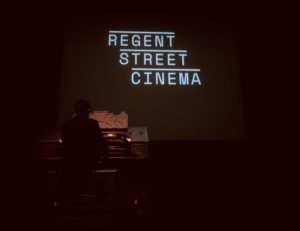
Original architectural details, a restored Compton organ and the ability to screen both traditional film formats and modern digital productions make it one of the most distinctive cinemas in the country.
As the cinema celebrated 130 years since the first public moving-image screening in Britain, its role as a living piece of history remains as important as ever.

For students, staff and visitors alike, Regent Street Cinema is more than just a place to watch films. It is a reminder that innovation, creativity and storytelling have always been cemented firmly into the core of the University of Westminster.
In a city filled with famous cultural institutions, Regent Street Cinema stands apart. It is not merely a cinema with a rich history; it is the place where British cinema itself began.